Open any supply cupboard and you'll find boxes marked "masks." Pick up three of them and you'll be holding three different products. They look alike. They don't do the same job.
Getting this wrong costs you twice: protection that's weaker than your staff assume, and money wasted on high-spec masks where a basic one would do.
Here's a plain-English way to choose.
The Three Main Types
1. Basic 3-Ply Medical Masks
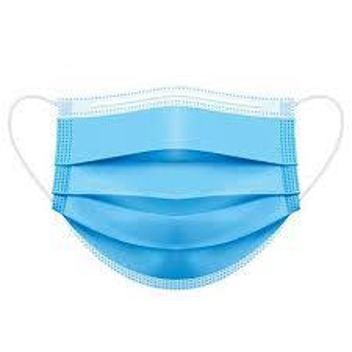
Three layers of non-woven fabric: an outer layer, a melt-blown filter in the middle and a soft inner layer. These are the everyday workhorse for reception, OPD, general wards, laboratories, housekeeping and visitors.
Check for: a stated bacterial filtration efficiency (BFE) of 98% or higher, not just the word "surgical" on the box.
2. Fluid-Resistant Surgical Masks (Type IIR)
Same idea, with added resistance to splashes and sprays. Choose these wherever blood or body fluids could reach the face: surgery, wound care, dental work and invasive procedures.
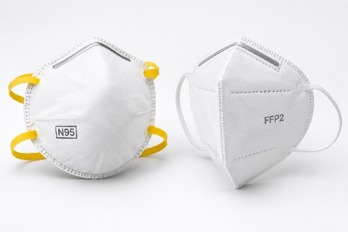
3. Respirators (N95 and FFP2-Type)

Built to filter very small airborne particles and seal tightly to the face. They belong in airborne-precaution areas and certain high-risk procedures, and they need proper fit testing. A surgical mask is not a substitute, and your infection control team decides where each is required.
Cloth masks have no place in clinical settings.
Fit Matters as Much as Type
A premium mask worn badly is a basic mask at best. Teach staff to:
- Cover nose, mouth and chin.
- Pinch the nose wire until it sits snugly.
- Check the sides. If air leaks around the edges, the mask isn't doing its job.
- Avoid touching the front, and never wear it dangling around the neck.
- Replace it when it's damp, soiled or damaged, and never reuse a disposable one.
Comfort counts too. A mask with soft, latex-free ear loops gets worn properly for a full shift. A scratchy one gets pulled down "just for a minute."
Which Mask, When? A Quick Guide
- Reception, admin, general wards, visitors: 3-ply medical mask.
- Surgery, dressing changes, splash-risk procedures: Type IIR.
- Airborne diseases or aerosol-generating procedures: fit-tested respirator.
When in doubt, follow your facility's infection control policy rather than guessing.
Four Mistakes We See Often
- One mask for everything. It's convenient, but it either over-spends or under-protects.
- Storing boxes badly. Damp or crushed packs compromise the mask before it's even opened.
- Skipping training. Putting on and taking off a mask correctly is a skill, not common sense.
- Buying on price alone. Cheap masks often mean inconsistent batches, weak ear loops and loose nose wires.
What to Check Before You Buy
- Stated BFE and the number of layers
- The type or standard it's made to
- Ear-loop strength and a firm nose wire
- Hypoallergenic, latex-free materials
- Consistent quality from batch to batch
- Clean, sealed packaging
Make Choosing Easier
At LIFORAMED, our face mask range includes 3-ply non-woven masks with BFE of 98% or higher, surgical Type IIR variants, and hypoallergenic, latex-free elastic. If you're comparing options, our sourcing guide for gloves, masks and caps explains what to look for before you order.
Not sure which mask belongs in which department? Talk to our team. We can help you map the right type to each area, so nobody is under- or over-protected.