Quick answer: Every blood collection tube's colour code signals the additive inside it, and using the wrong one can quietly skew results without looking wrong. Below is a fast reference to the common colour codes, why order of draw matters, and the errors worth auditing in your lab.
Why Does the Tube Additive Matter So Much?
A mislabelled or wrong-additive blood tube is one of the most common, and most avoidable, sources of rejected samples in any lab. The additive inside the tube is what makes the sample usable for a given test — some prevent clotting so plasma or whole blood can be tested, others let blood clot naturally so serum can be separated. Get it wrong, and you don't just risk a "spoiled" sample. You risk a result that looks normal but isn't, which is a far harder problem to catch downstream.
What Do the Common Blood Collection Tube Colour Codes Mean?
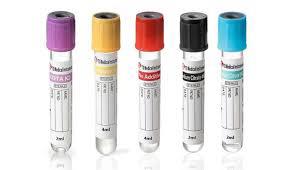
Here's a quick reference for the blood collection tubes you'll use most often:
- Red / Clot Activator — No anticoagulant, or a clot activator to speed clotting up. Used for serum chemistry, serology and blood bank cross-matching.
- Lavender / EDTA — An anticoagulant that binds calcium, keeping blood cells intact for counting. The standard tube for a complete blood count (CBC) and haematology work.
- Light Blue / Citrate — A precise blood-to-citrate ratio for coagulation studies such as PT and APTT. Must be filled to the exact draw volume, or the result isn't reliable.
- Green / Heparin — Prevents clotting without disrupting most chemistry analytes. Used for plasma electrolytes, ammonia and some stat chemistry panels.
- Grey / Fluoride — Contains a glycolysis inhibitor that stops cells consuming glucose after the draw, keeping glucose and lactate readings accurate.
International colour coding is broadly consistent, but always confirm against your tube manufacturer's insert and your lab's own SOP — exact formulations and volumes can vary by brand and test panel.
Does the Order of Draw Really Matter?
Yes, and it's often the step new phlebotomy staff skip. When several tubes are drawn in one sitting, the sequence affects results, because additives can carry over between tubes through the needle or stopper. Per CLSI's order-of-draw guidance, a typical sequence runs blood culture bottles first, then citrate, then serum tubes, then heparin, then EDTA, then fluoride — but always follow your lab's validated protocol, since local practice can differ. What matters most isn't memorising one "correct" sequence — it's every phlebotomist in the facility following the same one, consistently.
What Are the Most Common Blood Draw Errors to Audit?
A few failure points account for most rejected samples:
- Under-filling citrate (or other additive) tubes, which changes the blood-to-additive ratio and can invalidate coagulation results
- Incorrect tube inversion — too few inversions leave additive unmixed; too many, or too vigorous, can haemolyse the sample
- Storing tubes past expiry or outside recommended temperature, which affects vacuum draw and additive performance
- Mixing tube brands or batches without re-verifying draw volumes, especially for coagulation testing
A short refresher for new phlebotomy staff — and a periodic audit for experienced ones — catches most of these before they turn into rejected samples or, worse, a result a clinician acts on.
How Do You Keep Tube Quality Consistent Across Your Lab?
Colour coding only works as a system if every tube on the tray meets the same specification, draw after draw, batch after batch. LIFORAMED supplies vacuum blood collection tubes across the standard EDTA, clot activator, heparin, citrate and fluoride range, colour-coded to international standard and ISO 6710 compliant — alongside PET blood sample collector vials and the wider pathology and sample-collection consumables your lab needs.
Want to standardise tube sourcing across sites? Request a quote and our team will help you specify the right range.